Last updated November 17, 2026





Free written scope consultation - allowances, timeline, and change-order rules on paper before a single trade is scheduled
Bathroom Remodeling Warning Signs Every Homeowner Should Know
A contractor who quotes a bathroom remodel without asking about your existing plumbing rough-in locations isn’t cutting corners yet, but they’ve already told you they will. In our experience, the failures that end up as torn-out tile and angry phone calls were visible in the paperwork before the first hammer swung. We’ve watched homeowners in Coral Gables hand over deposits to crews who never once asked about subfloor rot or where the vent fan exhausts. This guide lays out the checkpoints: what a real quote asks, how payment should be structured, what day one on site should look like, and exactly what to do if warning signs show up after work starts.
Quick Answer
The clearest bathroom remodeling warning signs are a quote that never asks about your existing rough-in locations, subfloor condition, or ventilation path; a demand for a large upfront deposit with no milestone schedule; and a crew that starts tearing out before a permit is posted and waterproofing materials are on site. Any one of those is a signal to slow down and verify the contractor’s Florida license and complaint history before more money moves.
Styles & brands we work with
- Kitchen remodeling
- Bathroom remodeling
- Home additions & ADU
- Roofing
- Windows & doors
- Driveway & pavers
- Fence
Table of Contents
- What a Correct Bathroom Quote Asks Before It Prices Anything
- Payment Structure Red Flags
- Day-One On-Site Signals
- Waterproofing and Rough-In Checks Nobody Talks About
- How to Verify a Florida Contractor and Check Complaints
- What to Do If Warning Signs Appear Mid-Project
- Coral Gables-Specific Conditions That Expose Weak Contractors
What a Correct Bathroom Quote Asks Before It Prices Anything
A bathroom is the smallest room in the house and the most detail-dense. Before a single dollar figure is fair, a contractor needs three facts: where the existing drain and supply lines sit, what shape the subfloor is in, and where the vent fan sends its exhaust. Skip any one of them and the price you’re quoted is a guess dressed up as a bid. We’ve seen Coral Gables bathrooms from the 1950s where the cast iron drain had corroded to the point that a “simple” shower swap turned into a full slab access job. The contractor who didn’t ask is the contractor who’ll come back asking for more money.
A quote worth signing should mention, in writing:
- Rough-in locations: where the toilet drain, shower drain, and supply stub-outs currently sit, and whether the plan keeps them or moves them.
- Subfloor condition: whether the existing floor is sound, or whether there’s any sign of rot or deflection that needs correction before tile.
- Ventilation path: where the exhaust fan terminates and whether the duct is sized properly. A bath fan dumping into the attic is a mold problem waiting for summer.
- Waterproofing system: brand and type, whether that’s a sheet membrane, a liquid-applied membrane, or a bonded waterproof backer board.
- Allowance line items: what’s included and the dollar amount, so a $200-per-square-foot Cambria countertop doesn’t show up as a surprise change order.
If the quote you’re holding doesn’t touch those five points, it’s not a price. It’s an opening position. Our general contractor in Coral Gables page walks through how a written scope is supposed to read, line by line, before any work begins. That written-scope discipline is also spelled out in our Bradford Remodeling Co Coral Gables home overview of The Garrison Standard.
Payment Structure Red Flags
Here’s the one that costs homeowners the most: a demand for a large upfront deposit with no milestone schedule behind it. In Florida, taking more than 10 percent of the contract price as a deposit before any work begins is a warning sign, and in our experience it’s the single most reliable predictor of a project that stalls. A disciplined contractor ties every draw to a completed, inspectable milestone: demo done and debris hauled, rough-in inspected, waterproofing approved, tile set, fixtures installed, final walkthrough signed off. Money follows finished work, not the other way around.
Watch for these payment patterns:
- Deposit over 10 percent with no milestone schedule. The higher the deposit, the less leverage you have if the crew slows down or disappears.
- Cash-only requests or pressure to pay in full before the permit inspection passes. A permitted job has a paper trail; cash bypasses it.
- Payment due before a milestone is inspected. If you’re told to write a check for rough-in before the inspector has signed off, ask why.
- No written change-order process. Every legitimate adjustment should be a signed paper with a number on it before the extra work happens.
- “We’ll settle up at the end”. A contractor who won’t commit to a payment schedule in writing usually plans to improvise one later, on your dime.
The number on the page should never move at your front door. That’s why a written price before work starts is non-negotiable on every Bradford project, and it’s why the deposit structure gets laid out in the same document as the scope.
Day-One On-Site Signals
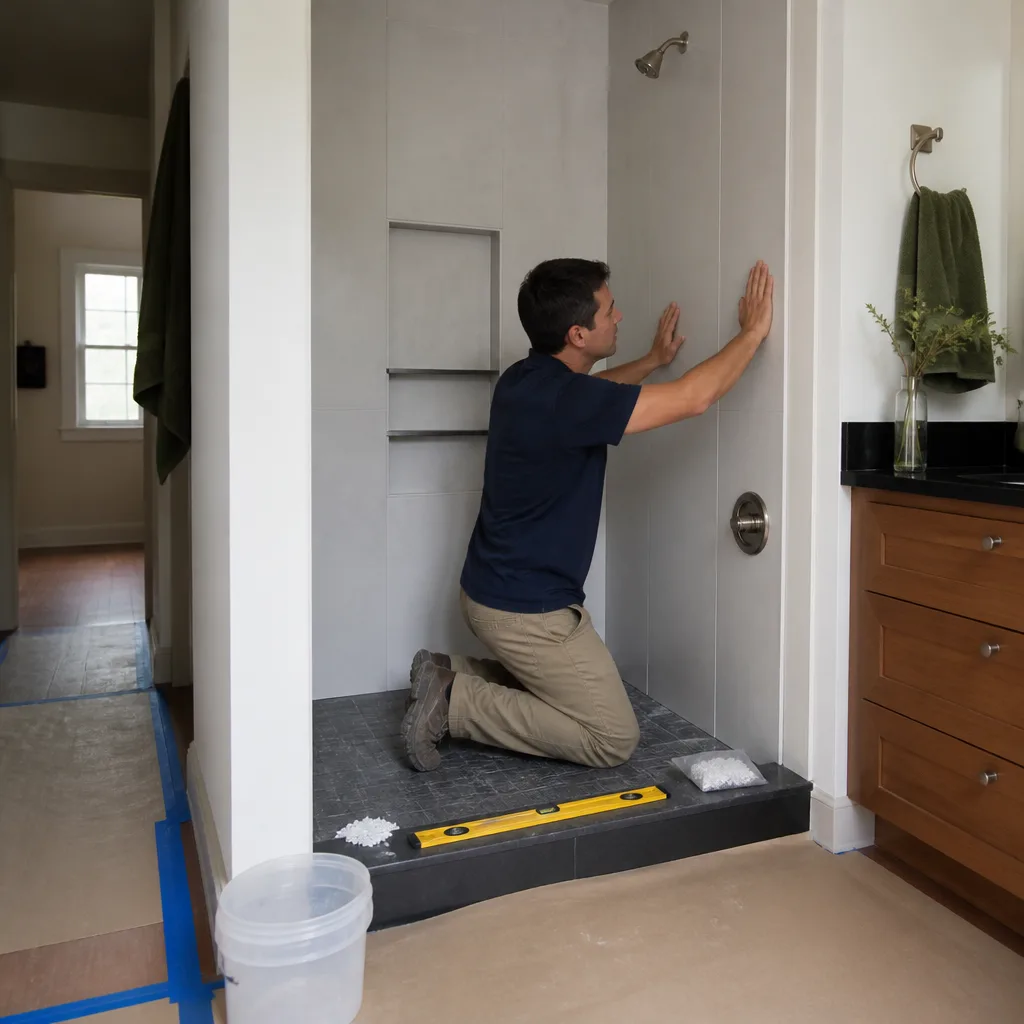
The first morning of work tells you almost everything you need to know about how the next three weeks will go. A squared-away crew arrives with three things already handled: the permit posted where an inspector can find it, the waterproofing materials physically on site before any tile is unloaded, and a work sequence that respects the order of operations. Tile goes in last for a reason. If your crew is stacking boxes of thinset in the hallway while the shower pan still has no membrane, they’re working backwards, and the waterproofing will be the first thing they skip when they run behind schedule.
Here’s what a disciplined day one looks like, in order:
- Permit visibly posted at the front entry or the bathroom door. If it’s “in the truck” or “coming Thursday,” that’s a real question, not a paperwork formality.
- Floor and stair protection down before demo. A crew that doesn’t protect your floors during demo won’t protect them during install either.
- Demo sequenced from fixtures to wall assembly to floor, with debris hauled the same day or the next morning, not left in the driveway for a week.
- Waterproofing materials on site before tile arrives. Sheet membrane, liquid membrane, or a waterproof backer board, named in the quote and delivered before tile work begins.
- Rough-in inspection scheduled before the walls close. This is the moment a plumbing or electrical problem still has a cheap fix.
- Daily site cleanup. A clean site at day’s end is the clearest daily signal of a crew that runs on discipline.
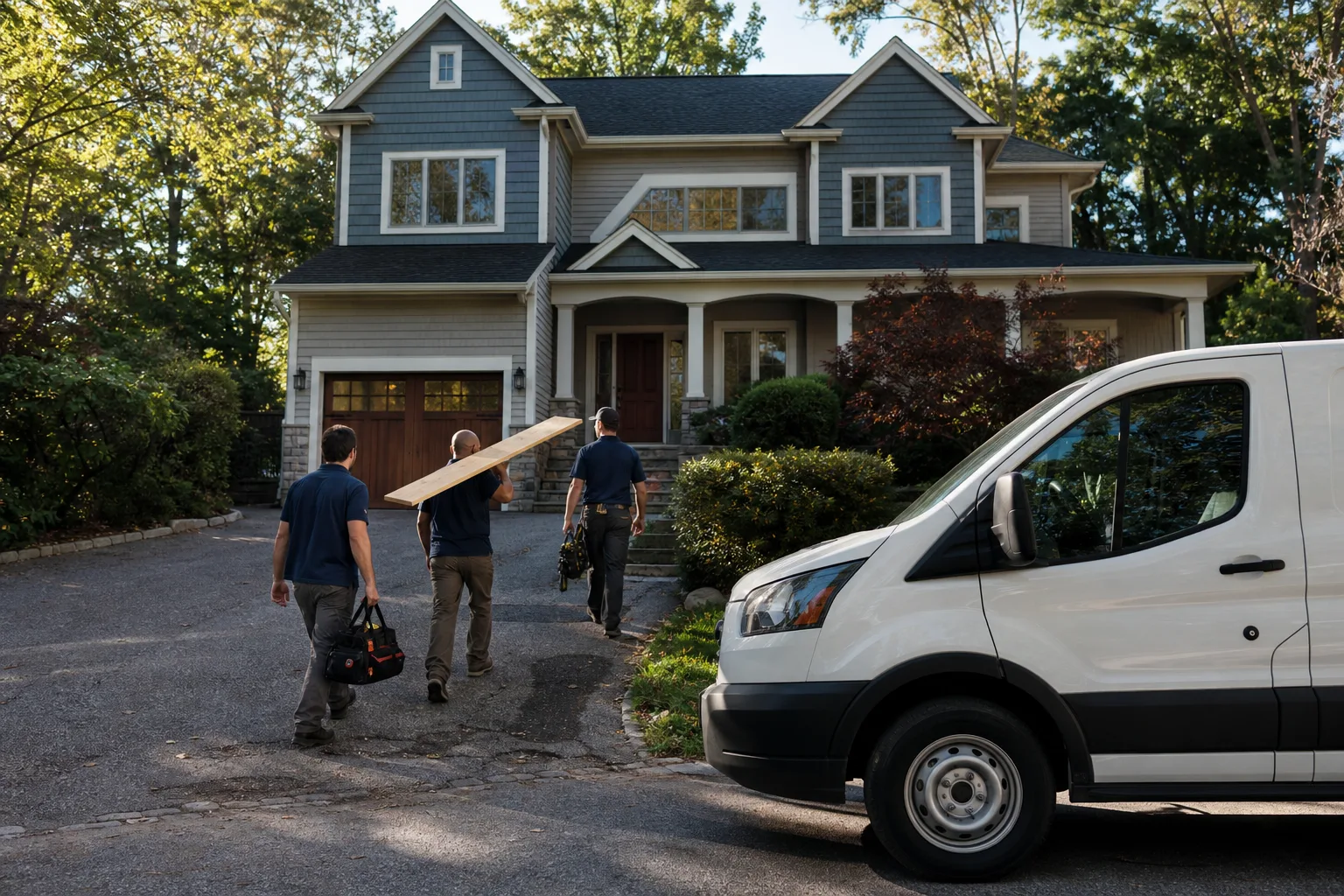
Uniformed, background-checked technicians are another tell. On a Bradford bathroom job in Coral Gables, you know exactly who is walking through your door before the crew arrives, because identity and conduct standards are set at the Garrison Partners level, not left to the individual job site.
Waterproofing and Rough-In Checks Nobody Talks About
Tile is decoration. The membrane underneath it is the actual shower. We’ve torn out three-year-old showers in Coral Gables where the tile looked perfect and the framing behind it was black with mold, because the shower pan was built with cement board and nothing behind it. Water always finds the seam between the pan and the wall if there’s no continuous waterproofing there. The tile didn’t fail. The invisible layer failed. That’s the layer no homeowner photographs at handover, and that’s why a contractor who cuts corners cuts it there first.
When the rough-in and waterproofing phase is underway, ask for these three things:
- Pre-tile photographs of the shower pan, wall seams, and the waterproofing system fully installed and dry. Take your own photos too.
- Sizing of the vent fan and its exhaust route. Bath fans should be sized to the room’s cubic footage and ducted to the outside, not into the attic. In Coral Gables, where summer humidity sits above 80 percent for months, a poor vent is a mold problem on a schedule.
- A flood test on the shower pan, where the membrane is filled with water and held for 24 hours before tile goes down. It’s the cheapest insurance in any bathroom.
If a contractor bristles when you ask for these, that’s your answer. It costs them nothing to give you photos and a flood test. The ones who balk have something to hide. The bathroom remodeling in Coral Gables page walks through the phase sequence our crews follow, including the pre-tile checkpoints a homeowner should expect to sign off on.
How to Verify a Florida Contractor and Check Complaints
Florida makes this easier than most homeowners realize. Every licensed contractor in the state is searchable through the Florida Department of Business and Professional Regulation (DBPR), and the search is free. You’ll find license status, license type, expiration, and any disciplinary history right on the state’s site. If a contractor’s license shows as “null and void,” expired, or unregistered, walk away from the bid before you sign anything. That’s a fact you can check in about five minutes and it’s the single most important pre-contract step.
Here’s the verification sequence to run before you sign:
- Search DBPR for the license number printed on the bid. Confirm the business name matches the name on your quote, not a related entity.
- Check the license type. A certified or registered general contractor or a certified residential contractor is what a full bathroom remodel requires. A handyman license is not.
- Review the complaint history. DBPR lists disciplinary actions and active complaints. One complaint means nothing; a pattern is a pattern.
- Check the permit history through your local building department for the address on the bid. A contractor who hasn’t pulled permits in your city may not know your city’s inspection culture.
- Confirm insurance and workers’ comp. Ask for a certificate of insurance naming you as additional insured, and call the carrier to verify the policy is active. Anyone can hand you a piece of paper.
- Look up the business entity on Florida’s Sunbiz site. Confirm the company is active and in good standing.
Do all six, every time, no matter how good the referral was. In our experience the answers take less than half an hour and prevent the calls we get from homeowners who signed with a contractor they never checked. Our kitchen remodeling in Coral Gables page covers the same verification steps, because the pattern of failure is the same across trades.
What to Do If Warning Signs Appear Mid-Project
If the crew is on site, the tile is half set, and the warning signs are showing, don’t panic and don’t hand over the next check until you’ve done the following. The goal is to convert a verbal worry into a written record while you still have leverage. Every step below should be done in writing, by email or text, dated, and saved to a folder. A paper trail is what protects you with DBPR, with your bank, and with any future contractor who inherits the job.
Work through these steps in order:
- Photograph everything. The permit (or its absence), the exposed rough-in, the state of the waterproofing, the site cleanliness, and any materials you were promised but aren’t seeing. Time stamps matter.
- Ask for the permit number in writing. If it doesn’t exist, that’s your first escalation. Send a dated email and keep the reply, or the silence.
- Request the written scope and payment schedule. If the contractor can’t point to the milestone the next draw is tied to, refuse the draw in writing.
- Call DBPR and open a complaint if you’re seeing unlicensed activity, abandoned work, or non-permitted work. The complaint itself becomes leverage even before the state acts.
- Stop payment on any check that was written for work that hasn’t been inspected. Notify your bank in writing.
- Get an independent inspection. A licensed inspector from a different firm, meaning not the contractor and not a friend of the contractor, gives you an impartial read on the state of the rough-in and waterproofing.
- Document a written notice of non-conformance, listing each warning sign and the date you observed it. Keep a copy. This is the document you’ll rely on if the relationship ends in a complaint or a small-claims action.
Mid-project rescues cost much more than correct starts. That’s why we put every price and every guarantee in writing before a single tool comes out. The 365-Day Done Right Promise covers a full year from completion: if the work fails inside that window, we come back and correct it at no charge. You don’t have to argue about it, because the terms were already signed.
Coral Gables-Specific Conditions That Expose Weak Contractors
Coral Gables has a building stock that tests a contractor’s real knowledge, and it exposes the ones who’ve been coasting on other cities’ work. The city was incorporated in 1925, and a large share of the homes in neighborhoods like Coral Gables’ French Village, the Riviera section, and the area around the Biltmore sit on original 1920s and 1930s plumbing, much of it cast iron and galvanized steel that’s now decades past its service life. A bathroom “refresh” in one of those homes that doesn’t touch the drain stack is a promise to be back in two years with a leak behind the wall. The Mediterranean Revival homes that give Coral Gables its character often have narrow baths with original terrazzo floors and interior plaster over masonry, both of which demand a different demolition and waterproofing approach than a drywall-over-stud build. A contractor who shows up with a plan for a suburban tract house is going to improvise their way through your Coral Gables bathroom.
Our subtropical climate makes the ventilation question urgent in a way it isn’t in most of the country. A bath fan venting into the attic was a reasonable code shortcut in some eras; today it’s a mold factory. Coral Gables inspectors know this, and they’ll flag it on the rough-in inspection. Skilled crews know the city’s permit and inspection culture well enough to sequence the work so nothing gets torn out to satisfy an inspector’s second look. That’s what Coral Gables building officials expect, and it’s what our crews plan for from day one.
We’ve also seen the pattern where a contractor prices the job without a single question about which Coral Gables neighborhood the home is in, because the answer changes everything. A 1928 home near the Granada Golf Course has different plumbing, subfloor, and ventilation realities than a 1990s build near the University of Miami campus. A bid that doesn’t ask which one you’re in is a bid written for nobody in particular. Our bathroom remodeling service in Coral Gables starts with that exact conversation, because the price depends on the answer.
Common Mistakes to Avoid
- Choosing the lowest bid without checking what it excludes. A price that doesn’t mention waterproofing, permit fees, or demo haul is a price for half a bathroom. Ask for an explicit exclusion list in writing before comparing bids.
- Paying a large deposit without a milestone schedule. In Florida, more than 10 percent upfront with no inspection tie is a warning sign. Every draw should follow a completed, inspectable milestone, not precede it.
- Letting the crew start demo before the permit is posted. In Coral Gables, a permitted job starts at the permit, not the sledgehammer. An unpermitted start removes your inspection protection and can void your homeowner’s policy.
- Approving tile installation before the waterproofing is documented. The tile is the last thing that goes down and the first thing a shortcut ends up behind. Insist on pre-tile photos and, where it applies, a 24-hour flood test on the shower pan.
- Skipping the DBPR license check because the referral was strong. A good referral from a friend is not a substitute for a five-minute state search. Check every time.
- Accepting verbal change orders. If the scope moves, the paper moves with it before the work does. An unwritten change order is an unpriced one.
- Not photographing the site at every stage. Your photographs are your evidence. Take them on day one, at every milestone, and at final walkthrough.
See the difference
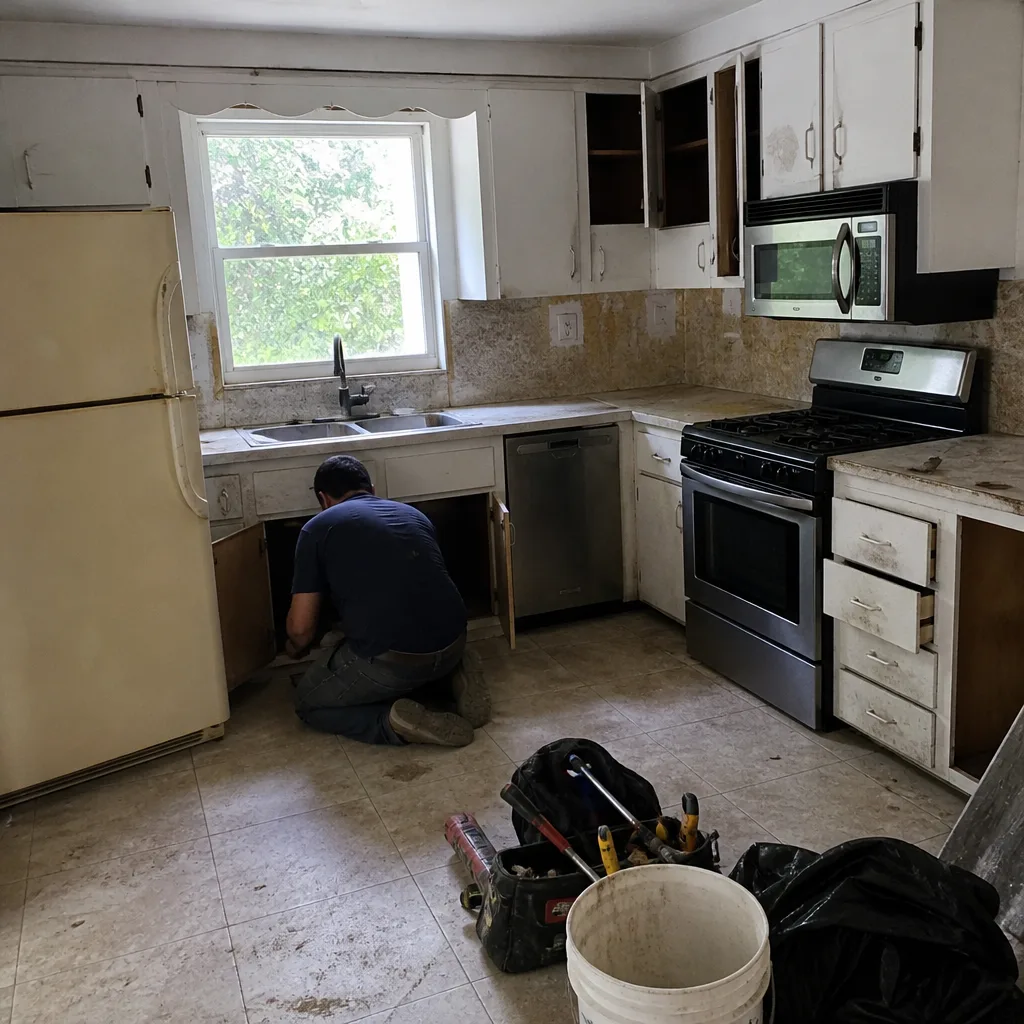 Before
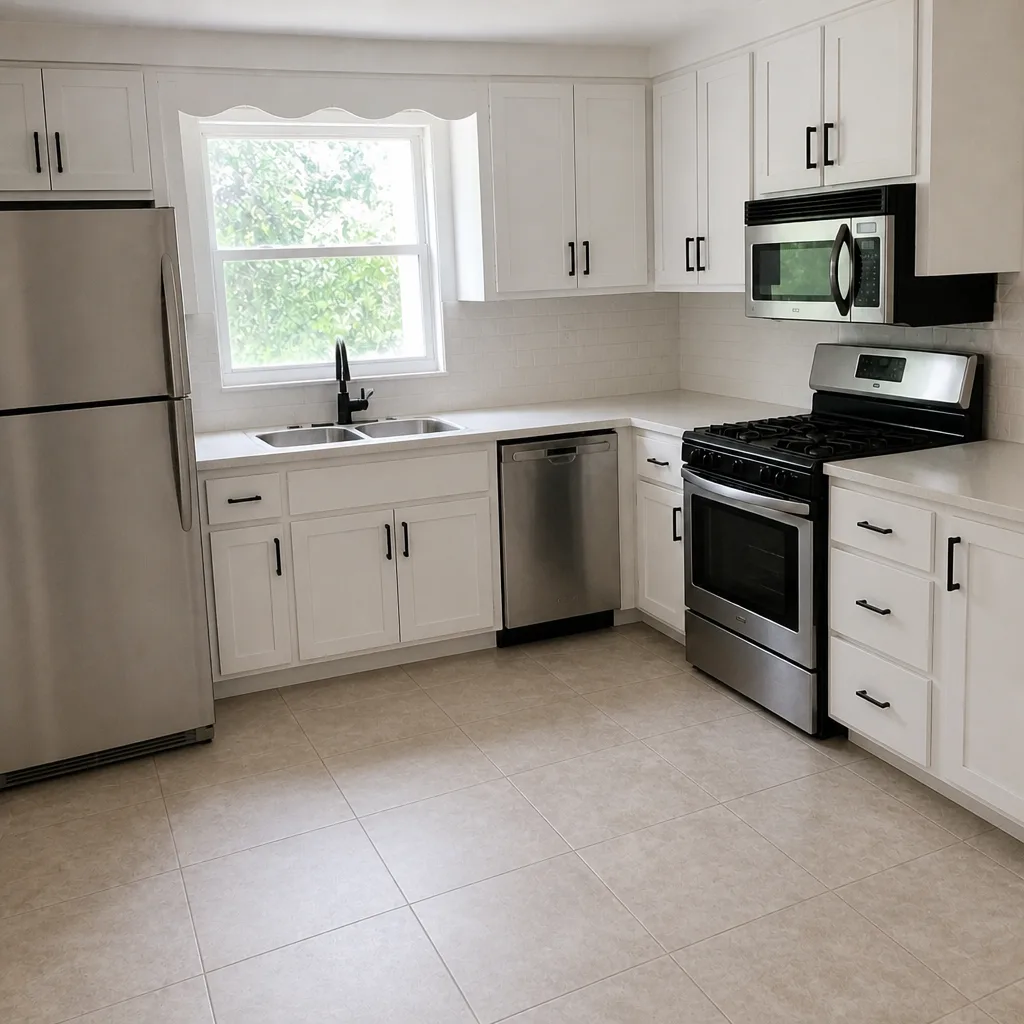 After
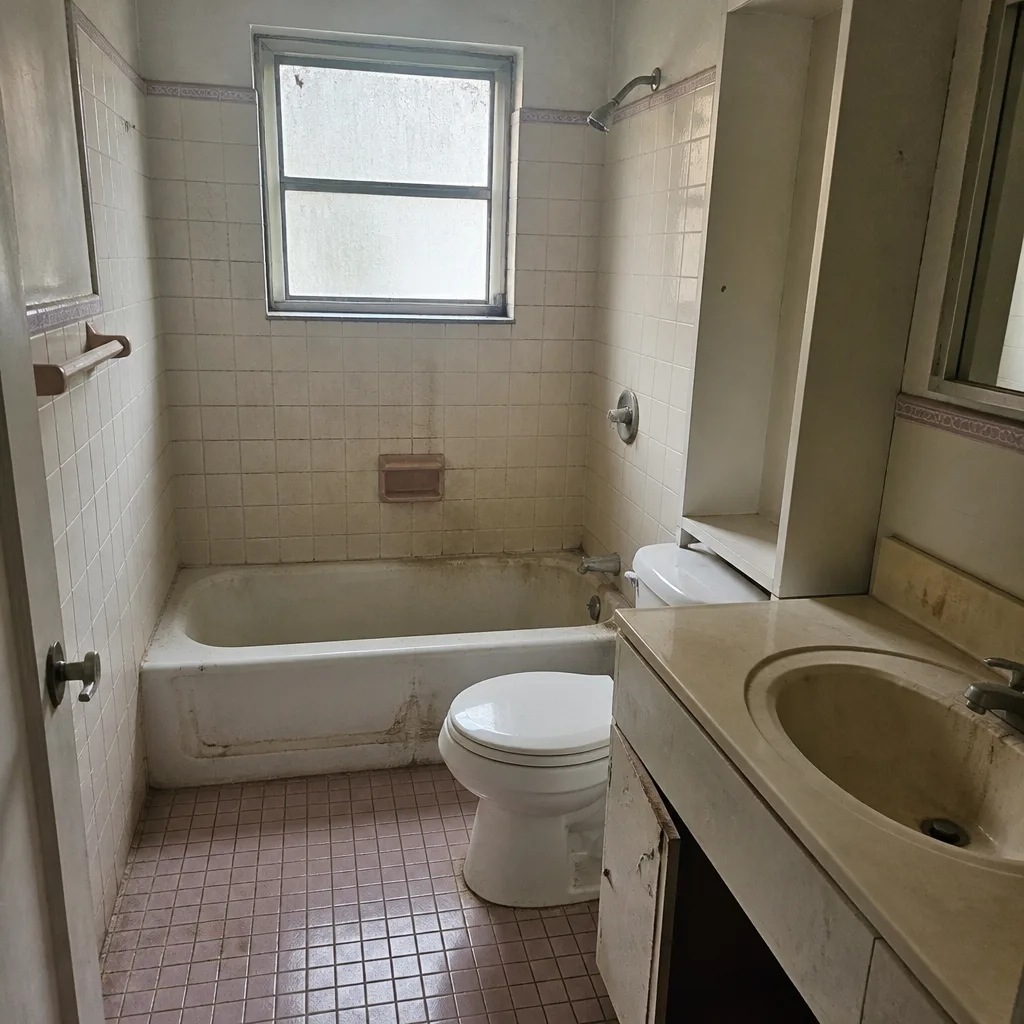 Before
 After
 Before
 After
When to Call a Professional
Bring in a licensed contractor when the warning signs have already appeared, when the bathroom involves moving plumbing or electrical, when the home is older than a couple of decades and you aren’t certain of the drain stack condition, or when you’re inheriting a half-finished bathroom from a previous owner. Any of those situations calls for a written scope, a permit pulled in the right name, and an inspection schedule you can see. If a shower has been leaking into an adjacent wall, if the vent fan dumps into the attic, or if a permit was never pulled, call a professional before more demo happens. A trained contractor can evaluate the state of the rough-in and waterproofing and give you a written price before any further work is done. Bradford Remodeling Co Coral Gables offers free estimates in Coral Gables. Call (833) 510-5367.
Frequently Asked Questions
The biggest warning sign is a quote that prices the job without asking about your existing plumbing rough-in locations, subfloor condition, or ventilation path. A disciplined contractor asks those three questions before they put a dollar figure on the page, because the answer changes the price materially. If a bid arrives without that conversation, treat it as an opening position, not a price. Call (833) 510-5367 for a written estimate that starts with the right questions.
A deposit should stay at or below 10 percent of the contract price, and every subsequent draw should be tied to a completed, inspectable milestone. In Florida, more than 10 percent upfront before any work begins is a warning sign, particularly when no milestone schedule accompanies the demand. Get the payment schedule in writing alongside the scope, so the draw for rough-in does not arrive before the rough-in inspection passes. Call (833) 510-5367 to see how a written price and payment schedule are laid out before a Bradford project begins.
Search the Florida Department of Business and Professional Regulation (DBPR) database for the license number printed on the bid, and confirm the business name matches. The DBPR record shows license status, license type, expiration, disciplinary actions, and any active complaints. Cross-check the business entity on Sunbiz and ask for a certificate of insurance you can verify with the carrier. It takes about half an hour and it’s the most important pre-contract step you’ll take.
Waterproofing materials should be on site and installed before tile work begins: a sheet membrane, a liquid-applied membrane, or a bonded waterproof backer board, named in the written scope. Tile is the last thing that gets set, not the first thing your crew unloads. Ask for pre-tile photographs of the shower pan and wall seams, and confirm whether a 24-hour flood test of the shower pan is part of the schedule. If the crew balks at those checks, that’s a warning sign.
Photograph everything, ask for the permit number in writing, and refuse the next payment draw in writing until the milestone it’s tied to is inspectable. If unpermitted work or abandoned work is in play, file a complaint with Florida DBPR and notify your bank in writing to stop payment on any check for uninspected work. Get an independent inspection from a firm unrelated to the contractor. Document each warning sign with the date you observed it, and send a written notice of non-conformance. A dated paper trail is what protects you.
Coral Gables has a large inventory of 1920s and 1930s homes with original cast iron and galvanized plumbing, terrazzo floors, and plaster over masonry walls, all of which behave differently under a bathroom remodel than drywall-over-stud construction. Subfloor conditions reveal themselves only after demo, and drain stacks often need replacement that wasn’t visible on the original bid. A contractor who prices the job without acknowledging that reality is pricing a different house. Call (833) 510-5367 for a written estimate built around the actual conditions of your Coral Gables home.
The Bottom Line
The patterns that turn a bathroom remodel into a nightmare are all visible before the first check clears. A real quote asks about your rough-in, subfloor, and ventilation before it prices anything. A disciplined payment schedule ties every draw to a completed, inspectable milestone. Day one on site posts a permit, installs waterproofing, and sequences work in the right order. DBPR verification is free, fast, and non-negotiable. And if warning signs appear mid-project, your photos, written notices, and dated emails are what protect you. Every Bradford project starts with a written price and ends with the 365-Day Done Right Promise in your hand. Call (833) 510-5367 to schedule your free estimate in Coral Gables.
Written by the team at Bradford Remodeling Co Coral Gables.