Last updated November 17, 2026








Free written scope consultation - allowances, timeline, and change-order rules on paper before a single trade is scheduled
Home Remodeling Maintenance Schedule: What to Do and When
Most remodeling warranties void themselves silently. Not because the contractor did anything wrong, but because the homeowner skipped a $40 caulk refresh in a shower corner, moisture crept behind the tile, and by the time the grout started flaking the blame landed on the tile work instead of the missing bead. We’ve seen this play out in Coral Gables more than once, and it’s the reason we treat maintenance as a contract obligation rather than weekend decoration. This guide lays out a real month-by-month schedule, shows which tasks are tied directly to your written guarantee, and explains how to document everything so a claim actually holds up if you ever need it.
Quick Answer
A home remodeling maintenance schedule is a written, dated checklist of the small tasks (caulk, grout, filters, weather stripping, hardware, drainage) that keep finished work inside its warranty. In South Florida, the tasks split into two seasons: a pre-hurricane-season sweep in April and May, and a post-humidity season correction in October and November. Skip the recurring items and you risk voiding the guarantee on the very work you paid for.
Styles & brands we work with
- Kitchen remodeling
- Bathroom remodeling
- Home additions & ADU
- Roofing
- Windows & doors
- Driveway & pavers
- Fence
Table of Contents
- Which maintenance tasks protect your warranty
- How South Florida climate changes the schedule
- Builder-grade intervals vs. premium materials
- How to document maintenance for a guarantee claim
- The month-by-month Coral Gables calendar
- The April and October deep-check lists
- Common mistakes to avoid
- Frequently asked questions
Which Maintenance Tasks Are Tied Directly to Your Warranty?
Four tasks sit on the warranty line. Miss them and you’re the one holding the bag; keep them current and the guarantee on your remodel stays fully enforceable.
The first is caulk and sealant at wet transitions: the shower-to-tile joint, the tub-to-floor seam, the backsplash perimeter, and the sink-to-counter seam. Caulk is a wear item. It fails on a clock, not a calendar year, and once it fails water moves into the substrate (the layer behind the tile that carries the weight and structure). That moisture damage is not a workmanship failure, so it isn’t covered.
The second is grout integrity. Hairline cracks that follow seasonal movement are normal. Cracks that widen or darken with moisture are the early warning of a substrate problem. Photograph them when you see them.
The third is weather stripping and door sweeps. On Florida rooms, garage-to-house doors, and any exterior entry, failed stripping lets humid air into conditioned space. That humidity is what warps a solid wood door or lifts a floor plank, and again, that failure lands under “homeowner maintenance.”
The fourth is HVAC filter changes. Every remodeled kitchen and bathroom we finish in Coral Gables is calibrated for a certain airflow. Clogged filters raise indoor humidity, and raised humidity is what drives the mold and moisture exclusions written into nearly every guarantee. Change them on schedule as listed on the filter package, or every 60 to 90 days in a busy household.
When those four items are documented, the 365-Day Done Right Promise on your project stays live and fully usable. When they aren’t, a contractor can reasonably point to the maintenance lapse.
How Does South Florida Climate Change the Maintenance Schedule?
Coral Gables sits in one of the more demanding climates in the country for finished interiors. Between roughly 75 and 90 percent average relative humidity, a hurricane season running June through November, and salt air carried on the prevailing breeze from Biscayne Bay, the intervals on a maintenance schedule shorten. A hardwood floor is not the same animal here that it is in Atlanta.
Here’s what the local climate actually does to your remodel:
- Wood moves. Solid wood doors, trim, and cabinetry expand in the wet summer months and shrink in the drier winter. A door that swings freely in March can stick in July. Adjust the strike plate before you plane anything.
- Salt air corrodes hardware. Exterior hinges, gate hardware, and coastal-facing door handles pit faster here than inland. Wipe them down and apply a corrosion inhibitor twice a year. Kohler and Moen fixtures hold up, but the exposed fasteners around them still need attention.
- Hurricane season is a deadline. Storm shutters, window seals (the ES Windows and CWS units in your openings included), roof-to-wall flashing, and all exterior caulk lines get inspected before June 1. After the first named storm, you’re already behind.
- Rain-driven moisture finds weak points. A single missed bead of exterior caulk at a window jamb lets wind-driven rain wick behind the stucco. That’s a slow, expensive discovery in August.
Every durable finish we install as part of a General Contractor in Coral Gables project is specified for this climate, but the materials can’t do the job alone. The maintenance schedule is the second half of the specification.
Builder-Grade Intervals vs. What Premium Materials Actually Need
Most online maintenance schedules are written for tract homes with builder-grade materials, and they tell you to caulk the tub every five years. That interval is wrong for a well-specified renovation, in both directions. Premium surfaces need more frequent touch-up, not less, because they’re expected to last longer.
Consider the difference. Stock ceramic tile with a standard cement grout will absorb and crack at a slow, predictable rate. A Cambria or Caesarstone quartz surface with factory tolerances, paired with a properly sealed grout joint, doesn’t need replacement, but the joint still needs a yearly reseal. KraftMaid and Wellborn cabinetry uses sturdier hinges and drawer slides than builder-grade boxes, so the hardware shouldn’t need adjusting often, but the door faces and frames benefit from a twice-yearly cleaning and wood-conditioning pass that keeps the finish intact.
On the exterior, GAF and James Hardie systems protect against water and sun better than builder-grade sheathing and siding, but every one of them relies on intact caulk joints. The materials raise the standard; the maintenance keeps it there.
Practical rule: if the surface is premium and visible, inspect it twice a year and clean it monthly. If it’s premium and hidden (behind-wall plumbing, under-floor work from your Bathroom Remodeling in Coral Gables project), it needs no homeowner maintenance at all, but you should photograph and record every access panel so a future crew can reach the shutoff without demolition.
How to Document Maintenance So Your Warranty Claim Holds Up
Documentation is the part most homeowners skip, and it’s the part that turns a dispute into a straightforward resolution. When a contractor looks at a failed bead of caulk or a lifted floor edge, the honest question is whether the homeowner kept the item current. A dated log answers that question in two minutes.
- Keep a single binder or shared folder. One folder per remodel project. If you’ve had multiple rooms finished by Bradford Remodeling Co Coral Gables, you’ll get a separate written guarantee for each, and each gets its own folder.
- Log each task with date, location, and product used. A short note is fine: “June 3, 2026 – re-caulked primary shower, floor-to-wall joint, 100% silicone, standard application.”
- Photograph the before and after. Wide shot plus close-up. Phone photos with the date stamp enabled are acceptable.
- Keep product receipts. The brand of caulk, grout sealer, and filter matters more than the price.
- Store the written guarantee in the same folder. It’s already in your hand at job close. Keep it there.
- Note any professional service visit. If a licensed technician works on your HVAC or plumbing, write down the date and the work performed.
If a failure does happen and the maintenance log is complete, the case is usually simple. The contractor reads the record, recognizes the failure as workmanship rather than neglect, and corrects the work inside the guarantee. Under the 365-Day Done Right Promise, that correction comes at no charge for the full year following project close.
The Month-by-Month Coral Gables Maintenance Calendar
Generic calendars tell you to “check your roof.” This one lists actual trade tasks tied to the seasons in Coral Gables, so you can put them on a real to-do list.
January
Inspect cabinet doors and drawers for loose hinges and slide hardware. Tighten anything that wobbles. Check the grout in the primary bathroom for cracks. Adjust any exterior door that has started to stick as the air dries out.
February
Clean range hood filters and wipe down cabinet exteriors. Check weather stripping at all exterior doors and the garage-to-house door; if you feel air movement, replace it. Confirm the HVAC filter is clean and fresh before the humid season.
March
Inspect exterior caulk at window perimeters, door frames, and roofline transitions. Look for gaps, pulls, and bubbling. Schedule replacements before April.
April (pre-hurricane deep check)
This is the most important month in Coral Gables. Complete the full pre-season deep check (listed below). Confirm storm shutters and panels are accounted for and functional, and that all exterior fasteners are tight.
May
Apply sealer to countertop grout joints and exterior hardscaping. Test the garage door for balance and the auto-reverse safety feature. Verify that all exterior lighting works.
June through November (hurricane season)
Weekly: check the humidity gauge indoors (aim for 50 to 60 percent). After every storm: walk the exterior perimeter, photograph any new gap or pull at caulk lines, check door sweeps, and look for water stains inside the home at ceilings and above window heads. Log every observation the same day.
July and August
This is when humidity says your name. Check wood doors and trim for swelling; adjust strike plates rather than planing. Inspect tile joints in bathrooms for darkening. Wipe down coastal hardware with a corrosion inhibitor.
September
Recheck all weather stripping. Replace any that has compressed. Confirm gutters and downspouts drain freely before the heaviest rain of the season.
October (post-season deep check)
Full deep check, again. Document any storm-related wear, photograph it, and file it. If any damage falls inside the 365-Day Done Right Promise, call and schedule a return visit.
November and December
Re-caulk any joint that failed during summer. Refresh countertop grout sealer. Change the HVAC filter if the last change was more than 60 days ago. Clean and condition wood surfaces. Update the maintenance log so it’s current going into the new year.
The April and October Deep-Check Lists
These two lists cover the same ground and are meant to be run twice a year. Print them, work through them methodically, and log the completion date. Each item should take under fifteen minutes; the whole list is a single Saturday morning.
The April Deep Check (Before Hurricane Season)
- Walk the exterior perimeter and inspect every bead of caulk at windows, doors, and rooflines. Replace any failed sections with 100% silicone or an exterior-grade polyurethane sealant.
- Inspect all window seals and operable windows. CWS and ES Windows units should open, close, and lock freely; if any unit drags or won’t latch, address it before the season.
- Test storm shutters, accordion panels, and impact coverings. Make sure mounting hardware is intact and accessible.
- Clear gutters and downspouts. Confirm drainage slopes away from the foundation.
- Check exterior lighting, motion sensors, and doorbell hardware.
- Inspect gate and fence hardware for corrosion, and reapply a corrosion inhibitor to exposed fasteners.
- Confirm the indoor humidity gauge reads between 50 and 60 percent on a normal day.
The October Deep Check (After the Wet Season)
- Repeat the perimeter caulk walk. Late-season rain exposes weak joints.
- Inspect all interior grout lines for new cracks, especially at floor-to-wall transitions in showers and around tubs.
- Photograph any change from your April record and note it in the log.
- Check door sweeps, weather stripping, and garage-to-house seals.
- Wipe all coastal hardware with a corrosion inhibitor.
- Change the HVAC filter and clean the return vent cover.
- Review the maintenance log against the past year’s checks. If anything is missing, catch it up now, before the calendar year ends.
Common Mistakes to Avoid
- Skipping the caulk refresh because the tile still looks fine. Water travels behind intact-looking tile. By the time you see a stain, it’s a substrate problem, not a sealant problem.
- Using the wrong caulk for the wrong joint. Silicone on a shower joint; paintable latex on exterior trim. Use the trade’s standard: 100% silicone in wet areas, exterior-grade polyurethane outside, paintable acrylic at interior-to-drywall transitions.
- Treating hurricane-season prep as roof-only. Storm prep in Coral Gables includes door, window, shutter, and caulk checks. Roof alone misses the majority of penetration risks.
- Planing a sticking door. In South Florida, sticking doors are almost always a humidity issue, not a sizing issue. Adjust the strike plate first; plane last.
- Not photographing before and after. A maintenance log with no photos is a claim waiting to fail. Photograph every task.
- Letting the HVAC filter run past its interval. A $20 filter protects thousands of dollars of interior finish by controlling humidity. This is the cheapest insurance on the list.
- Assuming the guarantee covers maintenance failures. It doesn’t. Read your written guarantee before the project closes and understand exactly what it covers (workmanship) and what it doesn’t (wear items and homeowner neglect).
See the difference
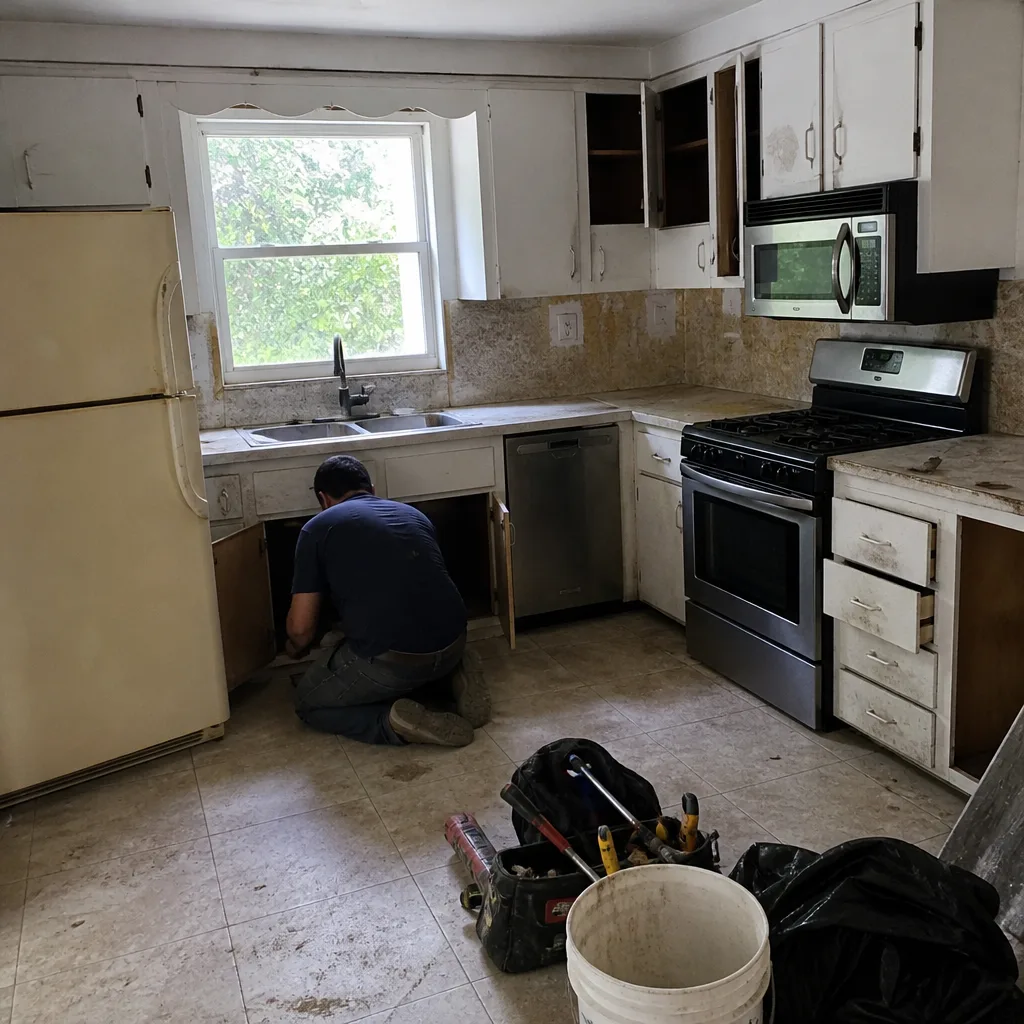 Before
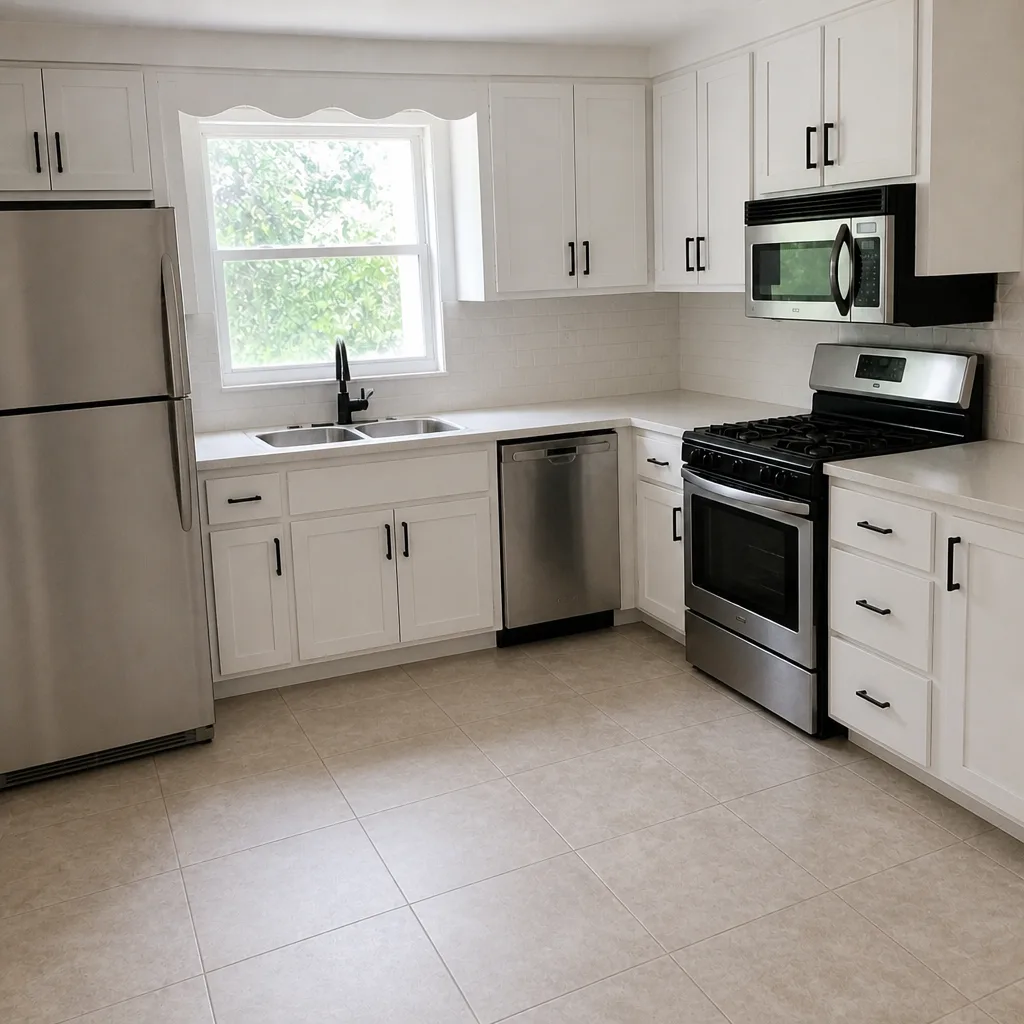 After
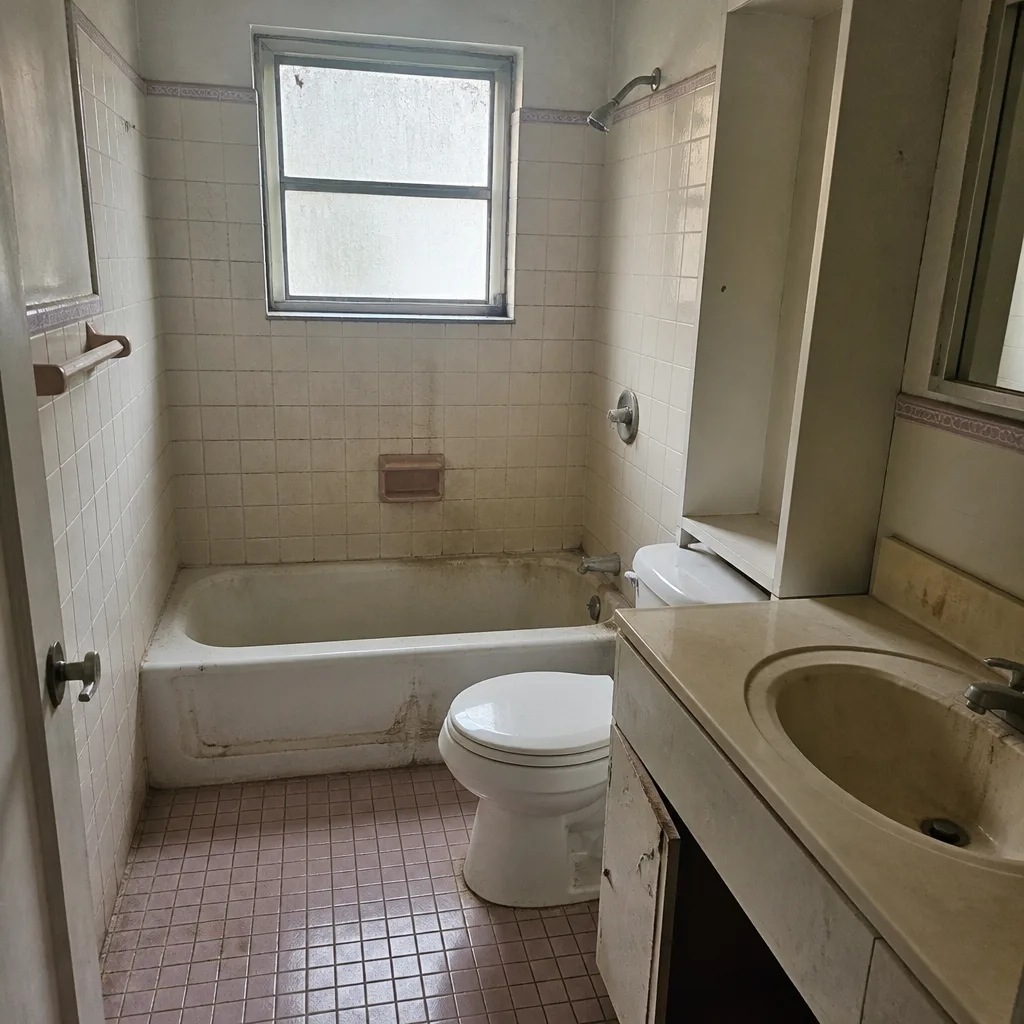 Before
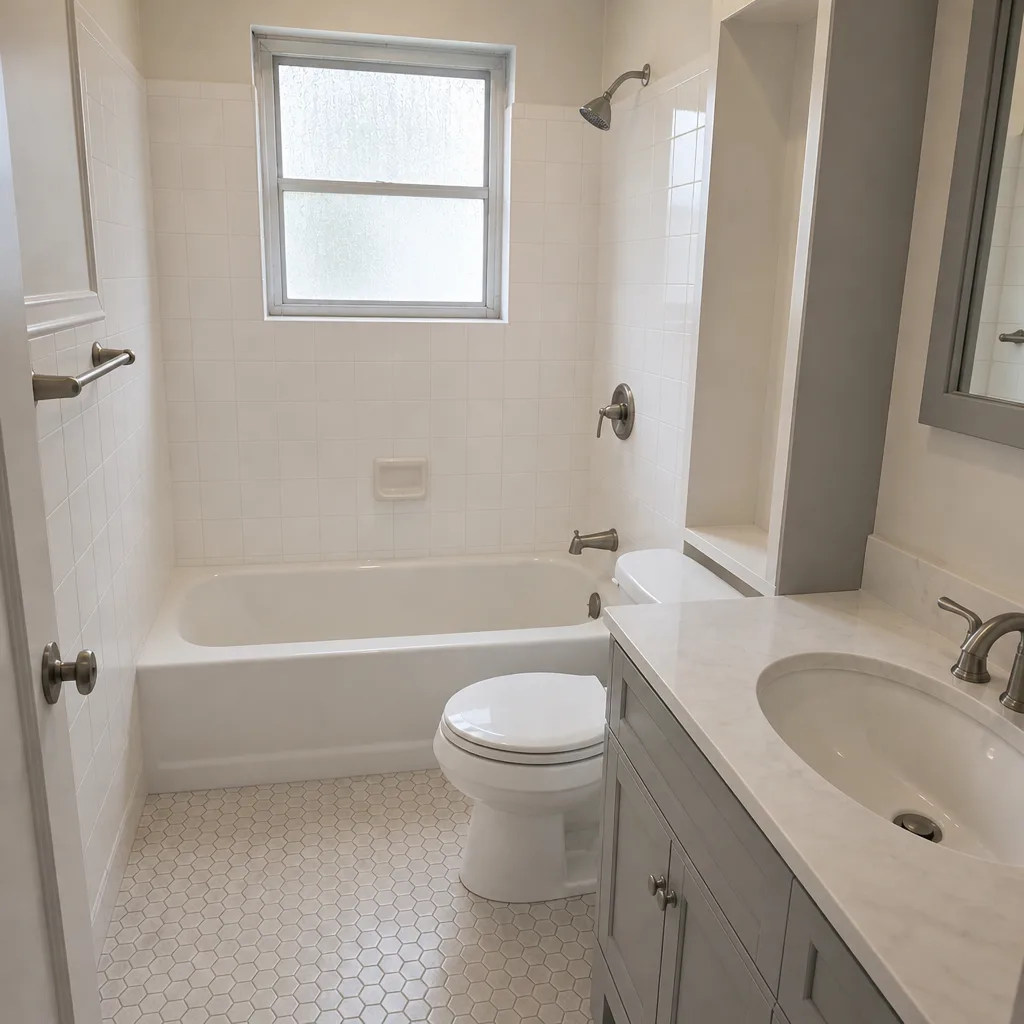 After
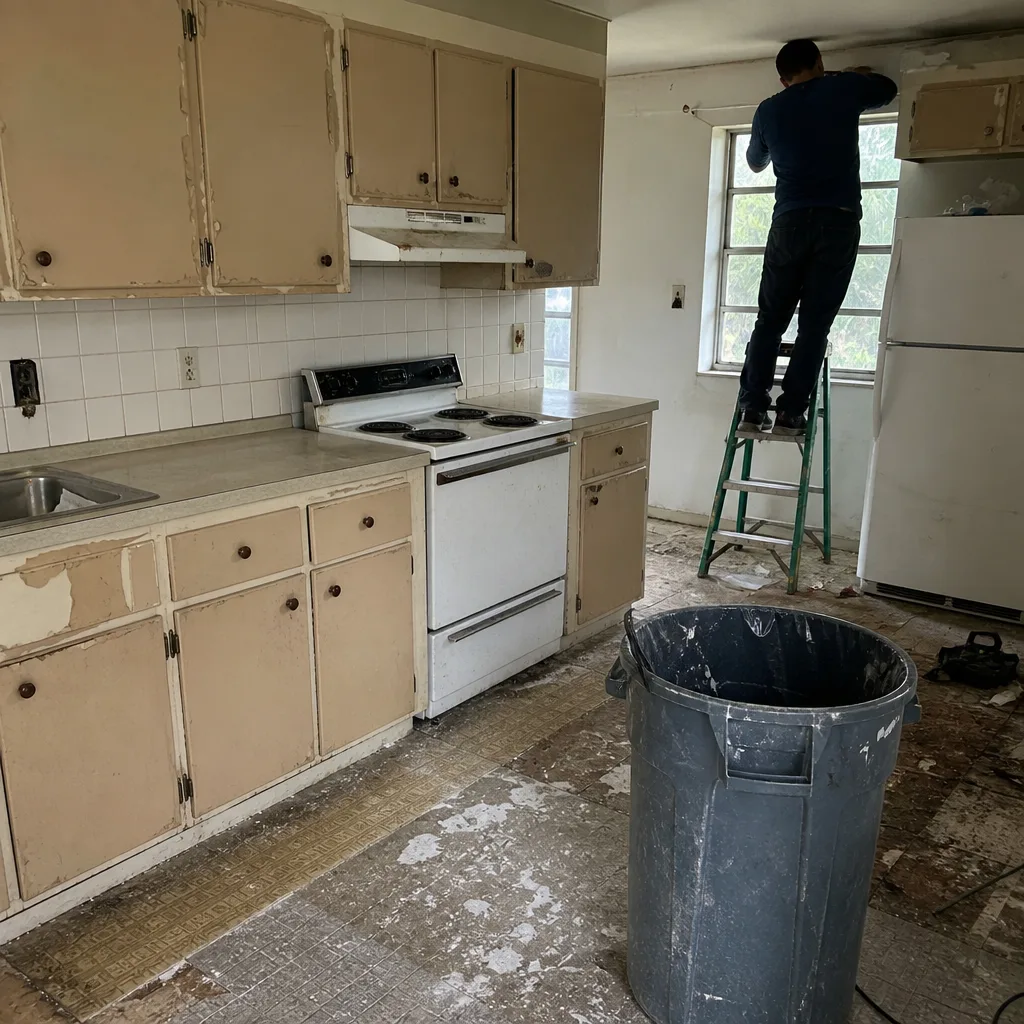 Before
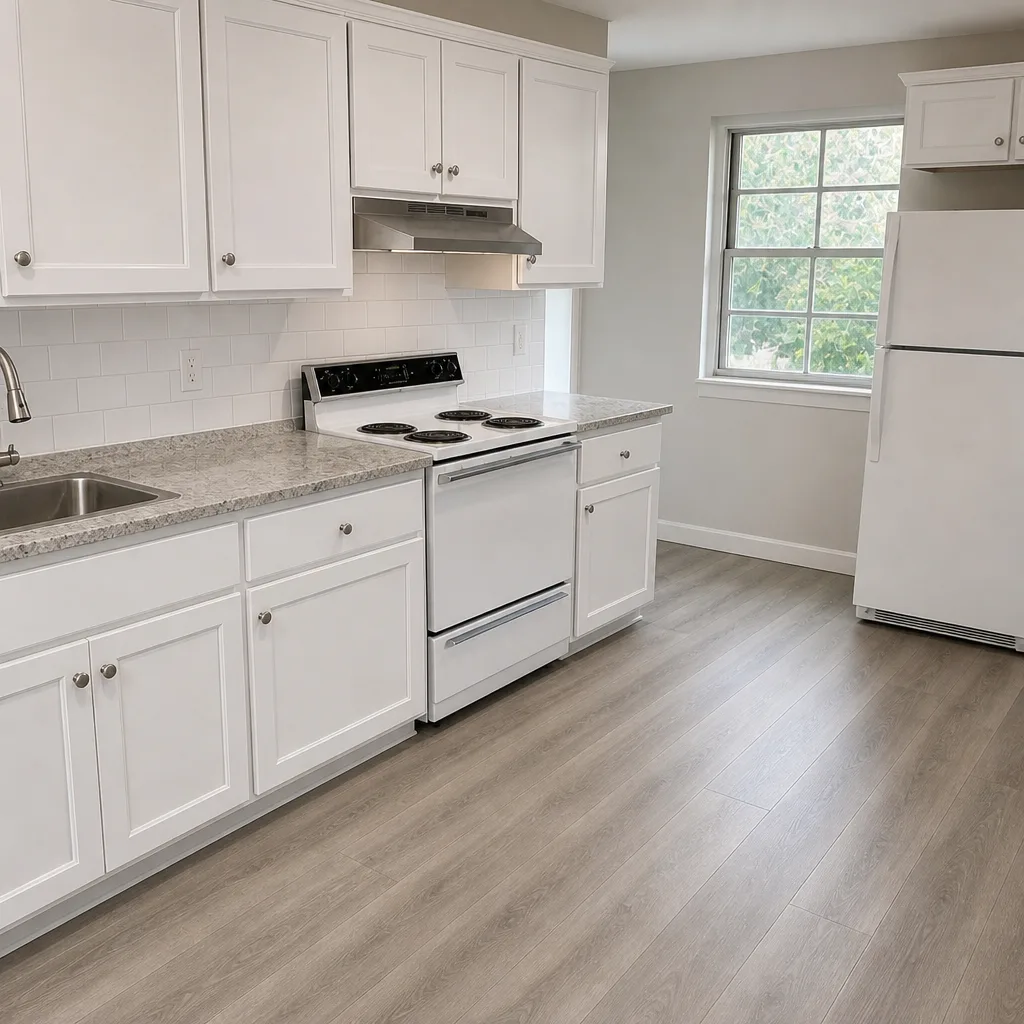 After
When to Call a Professional
Some items are do-it-yourself, and some aren’t. Call a trained professional for any of the following:
- Grout that darkens, softens, or has visible moisture behind it at the tile joint
- Any crack or stain at the top of a wall, above a window, or on a ceiling
- Storm damage to siding, trim, or exterior openings
- Water intrusion at any exterior door or window perimeter
- Any electrical work related to your remodel
- Cabinet door or drawer failures that require hardware replacement
Bradford Remodeling Co Coral Gables offers free estimates in Coral Gables for households on either side of that line. Call (833) 510-5367 and a live person will answer, not a voicemail. Every estimate for work we’d perform is written, line-itemed, and fixed with no change orders, so you know the number before any tool comes out of the truck.
If the issue is a maintenance task you’d rather not handle yourself, our Kitchen Remodeling in Coral Gables and bath teams regularly perform small maintenance service calls on projects they originally completed. For larger maintenance work, our general contractor locations coordinate the appropriate trade.
Frequently Asked Questions
Yes, in the specific cases where the guarantee excludes homeowner maintenance. Most guarantees, including ours, cover workmanship failures only. Failed caulk at a wet joint, a clogged HVAC filter causing humidity-driven damage, and storm-driven water intrusion through neglected exterior seals are all maintenance items, not workmanship items. Keep the four warranty-line tasks (caulk, grout, weather stripping, HVAC filter) current and the guarantee stays fully enforceable.
Inspect the caulk every six months and plan to replace it every two to three years in a primary bathroom. The higher year-round humidity in Coral Gables shortens that interval compared to homes inland. If the caulk peels, mildews behind the bead, or feels soft, replace it immediately rather than waiting for the annual inspection. Call (833) 510-5367 if you’d like a free assessment of an active moisture issue – a written estimate comes with it.
The joints need more attention, not less. A KraftMaid or Wellborn cabinet with premium hardware should last longer than a builder-grade box, but the door faces, frames, and hardware still benefit from a twice-yearly clean-and-condition pass. Cambria or Caesarstone surfaces don’t need resealing, but the grout joints at the backsplash and edge transitions do. Higher-quality materials reward maintenance with a longer service life; they don’t eliminate the maintenance.
Read the written guarantee, then compare the failure against the maintenance log. Workmanship failures within the guarantee period (a joint that gave way from a specified application, hardware that loosened from normal use, a finish defect that emerged within the first year) are covered. Maintenance failures (unsealed grout, water intrusion through failed exterior caulk, humidity damage from missed filter changes) aren’t. If you’re unsure, call and we’ll look at it. Our return visit under the guarantee is free if it falls inside the covered window.
Yes. Homes closer to the water see faster corrosion on exterior hardware, faster fading on exterior paint, and more salt-driven wear on metals. Add a corrosion-inhibitor wipe-down to the schedule twice a year instead of annually, and expect to replace exterior hinges and gate hardware sooner. The interior schedule stays the same. If you’re not sure whether your home is in the “salt zone,” a quick call to (833) 510-5367 will get you a free assessment.
Yes, on projects we completed, and for other property owners as a standalone maintenance call. We use the same deep-check list from this guide, log every task with photos in a folder you keep, and flag anything that would affect the 365-Day Done Right Promise before it becomes a claim. Calls are answered by a live person 24 hours a day, so schedule a free estimate at whatever hour works. See who we are in Coral Gables at our Bradford Remodeling Co Coral Gables home page.
The Bottom Line
Maintenance isn’t about keeping a house pretty. It’s the work that keeps your warranty alive. The four tasks on the warranty line (caulk, grout, weather stripping, HVAC filters) need to be current, documented, and photographed. The Coral Gables calendar runs on two big dates: an April deep check before hurricane season, an October deep check after. Premium materials from brands like KraftMaid, Cambria, Kohler, GAF, and James Hardie raise the ceiling on your project’s lifespan, but only if the ongoing maintenance keeps pace. Keep a folder, log every task, and read your written guarantee once a year. When something needs professional attention, call us. Estimates are free, the price is written before any work starts, and our team is available at (833) 510-5367.
Written by the team at Bradford Remodeling Co Coral Gables.