
CGI General Contractor in Coral Gables: A Homeowner’s Guide
CGI windows and doors carry some of the highest impact ratings available in South Florida, but a passed lab test means nothing if the contractor installs them into a wood buck that isn’t sized to the manufacturer’s approved drawing. In Coral Gables, the difference between a system that performs and one that leaks comes down to whether your contractor knows the Notice of Acceptance, the structural requirements, and Miami-Dade’s inspection sequence cold. This guide covers what a qualified installer actually has to know before a single anchor goes in.
If you’d rather have this handled by people who do it every week, call (833) 510-5367. Estimates are free.
Why Coral Gables Homes Need CGI Systems Specifically
Coral Gables sits in the High-Velocity Hurricane Zone, which is the toughest wind code in the country. Every opening in your home has to carry a product approved for that exposure, and that means a Miami-Dade Notice of Acceptance, not a generic Florida approval. CGI produces some of the strongest impact-rated window and door assemblies on the market, and the brand ranks near the top of what we install in this city.
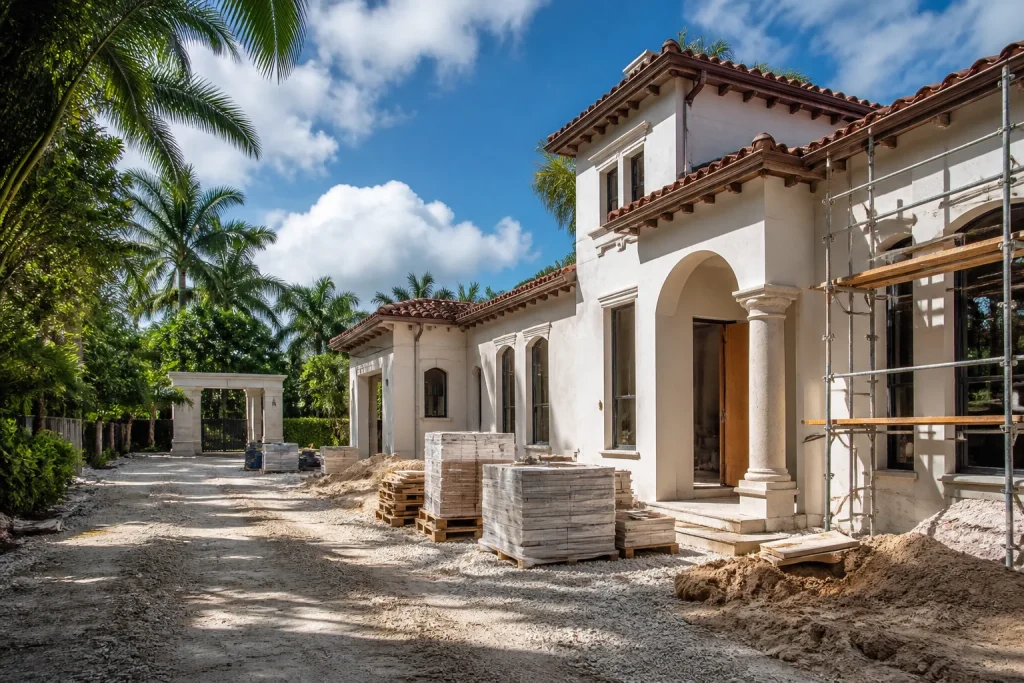
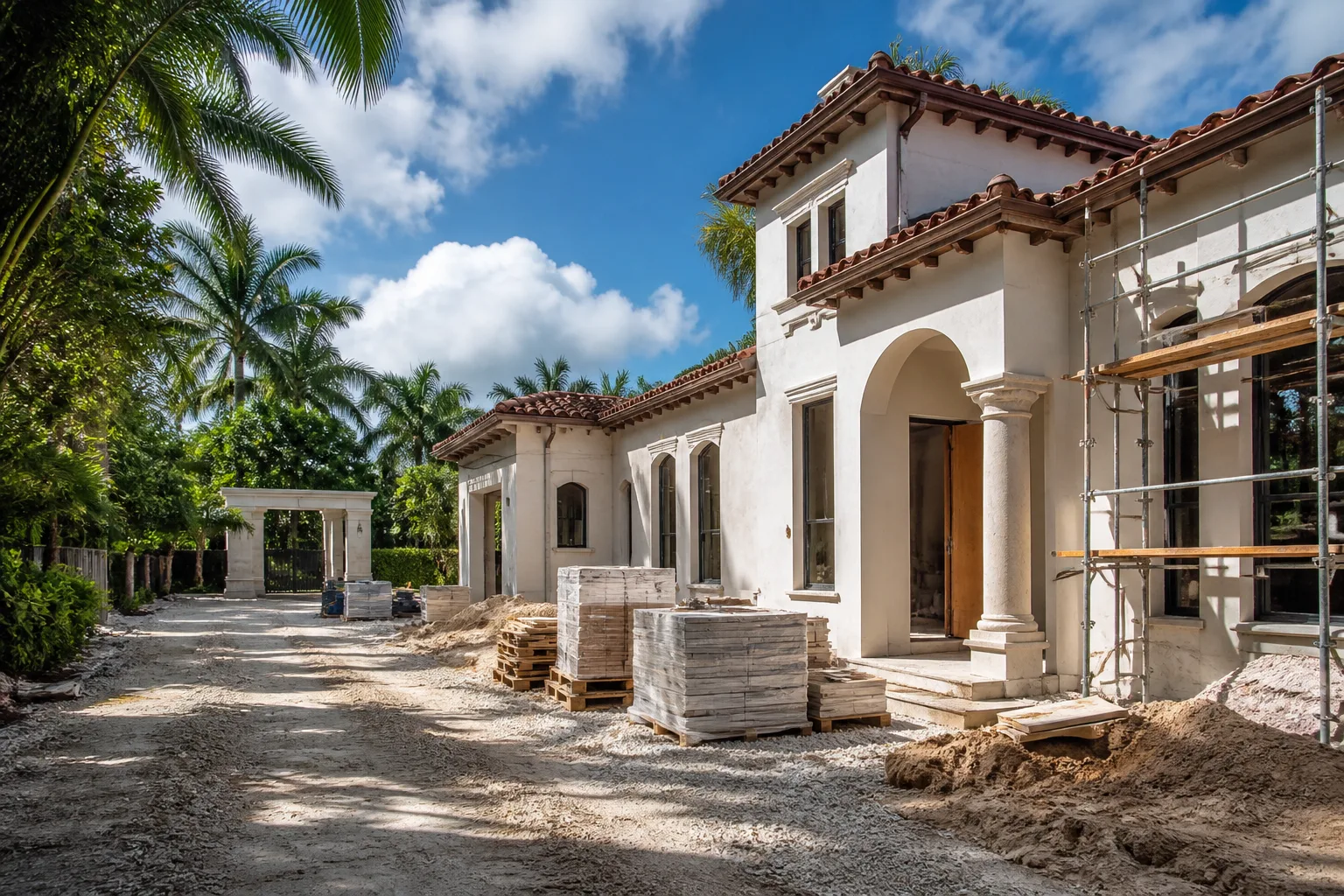
But the code doesn’t stop at the product. It extends to how the product is anchored, what it’s anchored into, and what the approved installation method says. Coral Gables has a large stock of homes built between the 1920s and the 1960s, many with original wood framing, coral rock walls, or masonry that’s been patched over the years. A window rated for 180 mph tested in a lab under perfect conditions doesn’t care about that. It relies on whoever installs it to notice the substrate and follow the approved method for that substrate.
We’ve seen homes in the Gables where a prior owner installed impact windows with framing nails into 60-year-old heart pine that had gone soft around the sill plate. It passed a visual inspection because the inspector can’t see inside the wall. Three years later the wind-driven rain found the gap. That’s the kind of failure CGI systems are supposed to prevent, and it only works when the install is as good as the product.
What the NOA Document Actually Tells Your Contractor
A Notice of Acceptance is the state’s formal document confirming a product’s compliance with the Florida Building Code and specifying how it must be installed. For CGI, the NOA is not a suggestion. It’s a binding installation instruction for every job, and the correct revision has to appear on your permit set.
Here’s why the revision matters. CGI updates NOAs as products evolve, anchors change, and testing gets refined. If your contractor uses a superseded revision, the building department will flag the permit, and you lose two to six weeks in Coral Gables waiting for a resubmittal. Worse, if the install is done to an old revision and caught at final inspection, you may be looking at removal and reinstallation.
- Permit set: the correct NOA number and revision date must match the product being installed, room by room.
- Anchor schedule: the NOA dictates anchor type, size, spacing, edge distance, and embedment depth. It’s not negotiable on site.
- Buck and shim requirements: many CGI systems call for a continuous structural buck, not spotted shims. The NOA tells you which.
- Sealant and flashing: the approved method specifies compatible sealants and flashing sequence. Substituting is a code violation even if it looks fine on the day.
Ask your contractor to show you the exact NOA revision they’re submitting with your permit. If they can’t produce it in a minute, that tells you something.
Structural Buck Requirements for CGI in Coral Gables
The wood buck – the frame the window or door unit gets anchored to – is where most CGI installations succeed or fail. In new construction, the buck is engineered alongside the wall assembly and inspected as part of the rough framing. In a remodel or replacement in a Coral Gables home, the project falls into a different category, and the contractor has to address existing framing directly.
For new construction, the requirements are cleaner: buck sized to the manufacturer’s approved drawing, adequate depth and width, proper fastening, and clear documentation on the plans. For replacements in older homes, the contractor has to inspect what’s actually there. That means opening the wall enough to see the substrate, checking for rot, checking the anchor substrate, and in some cases installing a new structural buck inside the existing opening rather than trying to reuse 70-year-old framing.
The common failure mode is a contractor who measures the opening, orders the unit, and shows up on install day assuming the buck is fine. In Coral Gables, with our stock of plaster-over-masonry and non-standard framing, it’s rarely fine. The right sequence is measure, inspect the opening, engineer the buck, submit, install. In that order.
If you’re also renovating adjacent spaces, our team at General Contractor in Coral Gables handles the sequencing so window work and interior scope don’t collide on the calendar.
Product Approval vs. Site-Specific Engineering
A product approval tells you the window assembly passed prescribed testing for specific conditions. It’s a baseline, not a guarantee. Site-specific engineering goes further: an engineer reviews your actual opening, substrate, wind exposure, and elevation, and signs off that the installation method in the NOA applies to your conditions.
When you need site-specific engineering in Coral Gables:
- The existing substrate doesn’t match what the NOA’s approved method assumes – coral rock, hollow clay tile, or mixed masonry and wood are common examples.
- The opening is larger than the NOA’s tested range, or the layout calls for a mullion or combination CGI doesn’t list as a pre-approved unit.
- The structure has been altered by prior work without permits, or the framing conditions are unclear.
- Your home has a historic designation – Coral Gables has a Board of Architects review process for many properties, and window changes often need approval before the permit even moves.
None of that is a reason to avoid CGI. It’s a reason to hire someone who knows when engineering is needed and can coordinate it. Skipping that step is how a permit gets stuck.
The Three Inspection Hold Points for Impact Windows in Miami-Dade
Miami-Dade requires specific inspections on impact installations, and each one catches failures the next stage would hide.
Rough framing inspection
This is where the buck gets checked against the approved plans. Failures here are almost always size, depth, or fastening – a buck that’s undersized, an anchor substrate that isn’t what the plans show, or a wall that was framed out of spec. This inspection has to pass before drywall or stucco goes back.
Anchor inspection
Once the unit is set but before it’s sealed and finished, the inspector verifies anchors against the NOA: type, size, spacing, edge distance, and embedment. Failures here are usually spacing shortcuts (an installer who “added a couple extra” or missed some) or anchors into material the NOA doesn’t approve. This is the single most common fail point on impact replacements in Coral Gables, because in a replacement, access to verify anchors inside a wall cavity is limited. The contractor has to document properly.
Final inspection
Final checks sealing, flashing, operation, and overall conformance with the permit set. Failures here usually trace back to a sealant substitution or flashing that’s applied in the wrong sequence. Both look fine visually but fail the code review.
How to Verify a Contractor Has Actually Installed CGI Systems
Any contractor can say they install CGI. Verifying takes an hour of effort and saves months of pain. Here’s how we’d check a competitor, and how we expect Coral Gables homeowners to check us.
- Ask for the NOA revision they’d submit for your unit. The right answer is specific: a number and date. Anything vague is a red flag.
- Look at permit history on past jobs. Coral Gables permits are public record through the city’s online portal, and Miami-Dade permits through the county. Search the contractor’s name, look for impact-related permits, and check that they closed with a passed final inspection.
- Visit a completed job if the contractor offers. Look at the sealant lines (they should be uniform and continuous), the operation of the sash, and how the unit meets the interior trim. Sloppy work is visible.
- Ask which CGI products they’ve installed. A contractor who has done the line has product knowledge – series names, glazing options, hardware – that a generalist won’t have.
- Ask about the broker. CGI products reach most Coral Gables jobs through distributors, and experienced contractors know which ones actually stock what they promise.
A contractor with a real track record answers these without hesitation. In our experience, the ones who can’t usually haven’t installed a CGI system recently, or ever.
When to Call a Pro
Impact window and door installations are not a homeowner project in Miami-Dade. The system depends on anchor embedment, structural buck engineering, and inspection compliance – none of which you can verify by eye. Doing this wrong risks your home during a storm and a denial at final inspection that can cost you the entire install cost plus the redo. Call a contractor who’s done it. That’s the whole recommendation.
For related work, see our Kitchen Remodeling in Coral Gables and Bathroom Remodeling in Coral Gables pages – both scopes involve window and door coordination, and doing the sequencing right saves real time.
The Bottom Line
CGI systems are among the strongest impact-rated products available for Coral Gables homes, and they perform when the contractor follows the NOA, engineers the buck properly, and runs the inspection sequence clean. Ask for the NOA revision. Ask for a closed-permit trail. And ask about site-specific engineering if the substrate isn’t textbook. Those three questions separate a qualified CGI installer from a contractor who happens to have installed impact windows before.
Every project we take in Coral Gables gets a written price before any work starts, background-checked and uniformed technicians on the job, and the 365-Day Done Right Promise: a written guarantee that if the work fails inside a full year, we come back and correct it at no charge. A live person answers the phone, not a voicemail.
If you’re in Coral Gables and need help, Bradford Remodeling Co Coral Gables offers free estimates – call (833) 510-5367. To learn more about how we work, see our Bradford Remodeling Co Coral Gables home page.
Frequently Asked Questions
Yes. The correct CGI Notice of Acceptance revision must appear on your permit set and match the exact product being installed, room by room. A superseded revision will stall the permit, and installing to an outdated revision can fail final inspection. Ask your contractor to show you the exact revision before submission. Call (833) 510-5367 for a free estimate.
Most CGI impact window replacements in Coral Gables run between $1,200 and $2,800 per opening installed, depending on size, series, glazing, and whether a new structural buck is required. Doors and large combinations run higher. Site-specific engineering, if needed, adds $800 to $2,500 to the project. Call (833) 510-5367 for an exact written quote – estimates are free.
Not with a written price. Every project we take gets a firm written price before any work begins, and it doesn’t move at the door. If we find an unexpected condition in the wall during the inspection phase, that’s discussed before work proceeds, not after. Call (833) 510-5367 to schedule your free estimate.
Yes, we pull the permits and coordinate every inspection – rough framing, anchor, and final. A typical CGI window replacement in Coral Gables runs four to eight weeks from approved permit to final inspection for a whole-home scope, with installation on-site taking one to two weeks. Permit review in Coral Gables averages two to four weeks, and longer if historic review is required. Call (833) 510-5367 for a timeline specific to your home.
Written by the team at Bradford Remodeling Co Coral Gables.
Need Construction Help?
Call Bradford Remodeling Co Coral Gables - licensed & insured, here with fast after-hours help in Coral Gables.
(833) 510-5367