
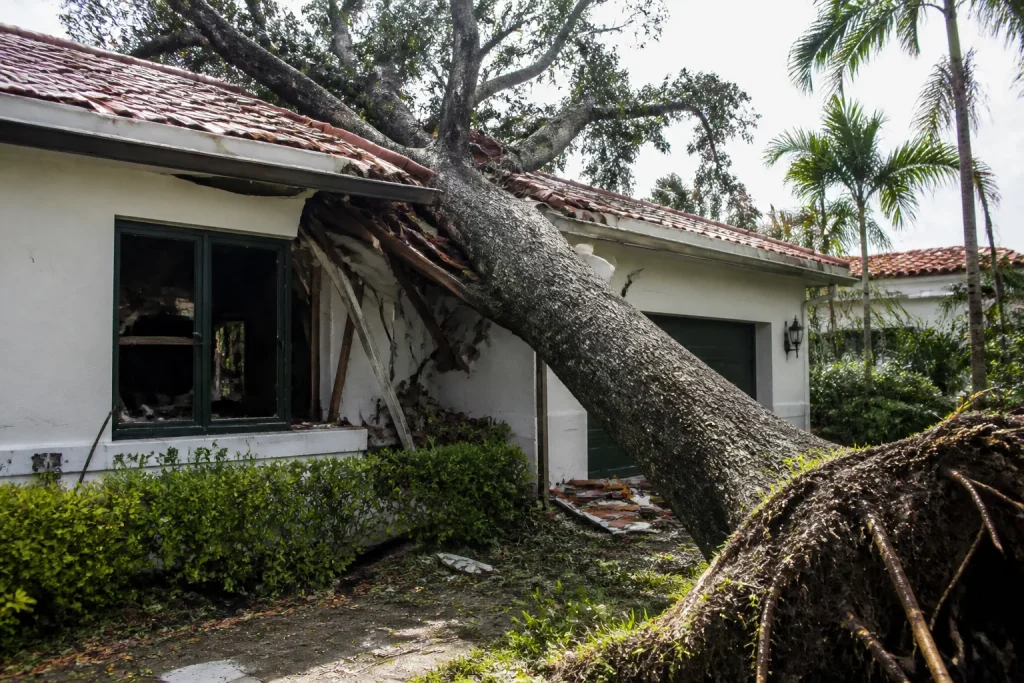
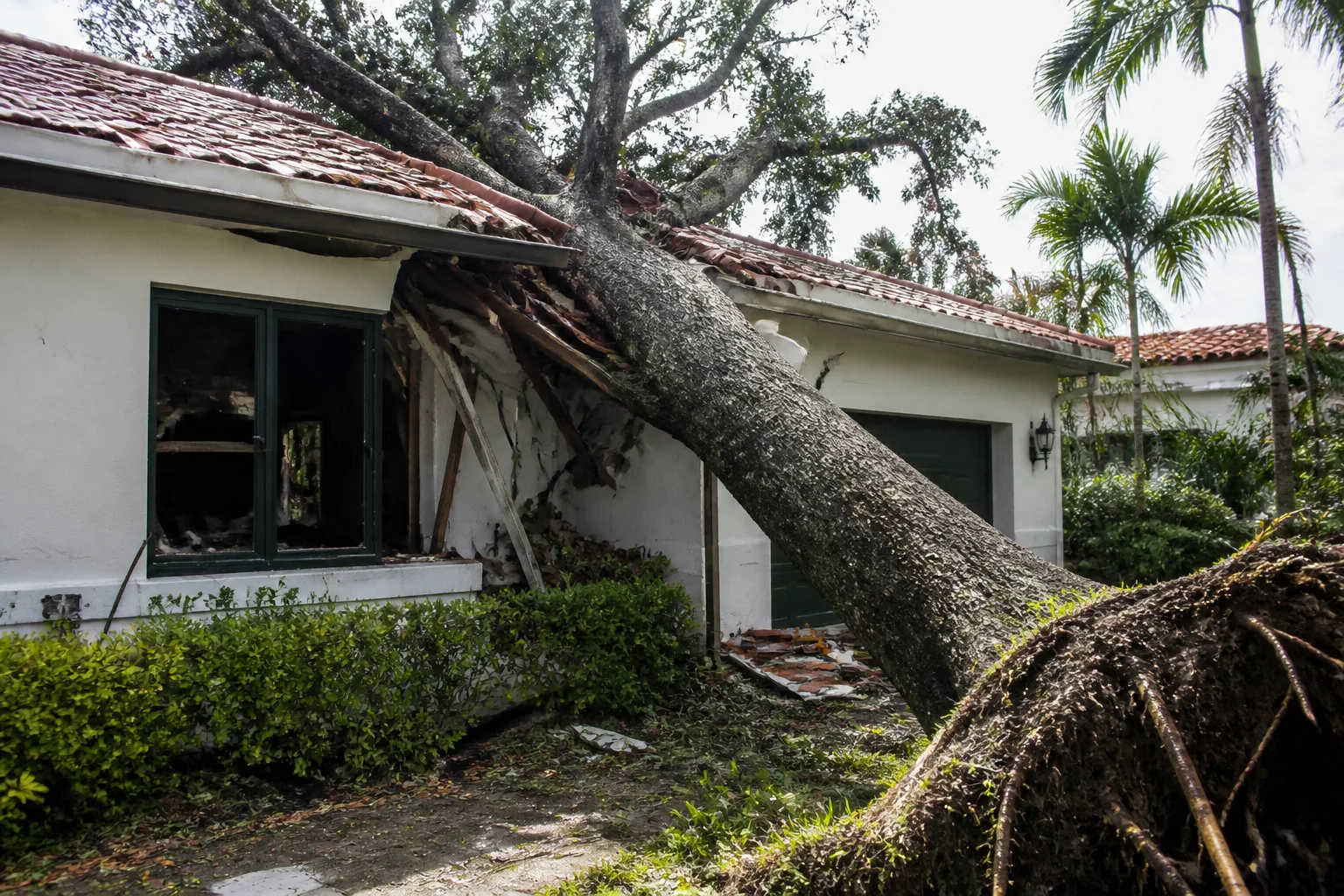
Emergency General Contractor Near Me: What Coral Gables Homeowners Should Do First
A burst pipe or storm breach is a 20-minute decision window. In that window, most Coral Gables homeowners do the one thing that costs them the claim: they let a contractor start demo before the damage is documented. What you do in the first hour decides whether your insurer pays or denies – not the size of the leak. Here’s the sequence that protects your claim, and how to vet any emergency general contractor before you authorize a single swing of a hammer.
What Should You Do First After Storm or Water Damage in Coral Gables?

Document before you touch anything, then stop the water or weather intrusion, then call. That order matters more than speed. Insurance adjusters process claims based on evidence captured before mitigation – once water-soaked drywall is bagged and hauled, you have no proof of how high the water sat or what it ruined. The documentation sequence is what protects you:
- Timestamp photos and video. Walk the whole affected area before anyone moves a thing. Shoot wide, then close. Capture water lines on walls, standing water, damaged belongings, and the source (burst supply line, failed water heater, roof breach). Your phone stamps the time automatically – leave that on.
- Write a plain damage description. One page. Room by room, item by item, with rough dimensions. “Two inches of standing water across the north half of the kitchen, cabinets saturated to 12 inches, tile floor lifting at the threshold” is worth more than a dozen photos alone.
- Do NOT touch these before the adjuster sees them: damaged drywall, ruined cabinetry, warped flooring, and any structural crack. Move valuables to dry ground, but leave the wreckage in place. Documented damage is your evidence.
- Call your insurer’s claims line and get a claim number the same day. Ask what your policy covers for emergency mitigation, and note the name of who you spoke to.
Only after those four steps should mitigation begin. In Coral Gables, we’ve pulled wet cabinetry out of homes near the Granada entrance where the homeowner had already bagged and dumped half the kitchen before the adjuster arrived – the claim got trimmed because the damage couldn’t be verified. If you’d rather hand the paperwork side to someone who does this often, call (833) 510-5367 and we’ll walk you through the sequence before anything gets torn out.
What’s the Difference Between Emergency Mitigation and Repair Work?
Mitigation stops the damage from spreading. Repair puts the house back together. Insurance typically treats these two very differently, and conflating them is one of the top reasons storm claims get denied in Coral Gables.
- Emergency mitigation – water extraction, drying equipment, tarping a breached roof, boarding a broken window, shutting off a gas line. Most policies cover this immediately to prevent further damage, sometimes with a cap. This is work you can authorize on the spot, usually with a written scope and photos.
- Repair and rebuild – replacing drywall, cabinetry, flooring, roofing, or structural framing. This requires the adjuster to inspect, approve scope, and agree on a number before work starts. If a contractor begins a full rebuild in the first 24 hours without adjuster sign-off, the insurer can deny the portion they never approved.
Here’s the practical split: if the ceiling is still dripping, dry it out and stop the water. If the ceiling has already collapsed and needs to be rebuilt, that’s a repair – document it and wait for approval before framing goes back in. The good contractors know the line. In our experience, the ones who blur it are the ones who want to control the claim before your insurer does. Even on an emergency call, a by-the-book general contractor gives you a written price before any work starts – no numbers that move at the door.
When we run a mitigation-and-repair job in Coral Gables, the written scope lists mitigation on one line and rebuild on another so the homeowner can hand the insurer exactly what it needs. That’s The Garrison Standard at work: the price is on paper before a tool comes out.
How Do You Vet an Emergency Contractor Before Authorizing Work?
A crisis is when people skip checks. Don’t. Three things to verify on any emergency contractor before you let them touch your home – even at 2 a.m.:
- Active Florida license. Ask for the license number and check it against the Florida DBPR license lookup on your phone. A licensed general contractor should produce it without hesitation. No license, no work.
- Certificate of general liability insurance. Ask for a current certificate naming the policy in force, and confirm the coverage is active. If they can’t show one, walk – you’re the one exposed if a worker gets hurt or something gets broken.
- Written scope, even for an emergency. A one-page scope with what’s being done, what it costs, and what’s excluded. Anyone who says “we’ll sort the paperwork later” is telling you how they operate on the paperwork.
Two more habits worth building. First, a background-checked, uniformed crew matters even more in an emergency – you should know exactly who’s walking through your door before they arrive. Second, watch for out-of-town storm chasers who surface in Coral Gables after every named storm. Local crews come back to the same neighborhoods; some of the fly-by-night ones don’t. Ask how long they’ve operated in Miami-Dade and be skeptical of a “boom” of new faces after a storm.
At Bradford we work with a documented roster of name-brand materials – GAF and James Hardie for the exterior envelope, Therma-Tru for doors – so the rebuild spec is traceable and the manufacturer warranty actually holds. That’s what protects you on the repair side of a claim.
What Is an Assignment of Benefits Clause – and Should You Sign One?
An Assignment of Benefits (AOB) clause transfers your insurance claim rights to the contractor. Sign it and, in many cases, every claim decision moves from you to them. An AOB lets the contractor negotiate, file, and in some cases sue the insurer directly – in your name, over your claim – while you lose control of the outcome.
Florida cracked down on AOB abuse with 2019’s HB 7065, but AOBs still appear in contracts. Here’s how to read one in the first 24 hours:
- Look for the word “assign,” “assignment,” or “assignment of benefits.” If a “post-loss assignment” or “transfer of claim rights” clause is buried on page 3, you found it.
- Ask: does this transfer my claim or just authorize the work? A work authorization lets the contractor do the job and bill you or your insurer. An AOB transfers the claim itself. You want the first, not the second.
- Never sign an AOB in a crisis meeting at your front door. A contractor who leads with the AOB is asking for your claim, not just your business.
In our experience, a contractor confident in the work doesn’t need your claim rights. Bradford works off a written price and never asks a homeowner to assign a claim. If a door-to-door contractor in Coral Gables opens with an AOB before he opens with a price, that’s your answer.
Coral Gables Specifics: Red-Tags, Inspections, and “Unsafe to Occupy”
A structural red-tag is a finding that a building is unsafe, and it’s issued by the local building official after an inspection – commonly following a storm, a partial collapse, or a serious water or fire event. When a Coral Gables structure is red-tagged, the home gets an unsafe-to-occupy or similar unsafe designation, and the homeowner can’t legally occupy it until the structure passes a follow-up inspection. Who you call matters as much as what happens next.
- Who issues it: the building official for the City of Coral Gables, working through the city’s building and inspection department. The city – not your contractor – controls the red-tag and the clearance.
- What happens after: the city requires structural repairs to be permitted and inspected, with a licensed contractor submitting a permit application and a scope to the building department. The property stays flagged until the work is done, inspected, and cleared.
- Why it matters for your claim: an unsafe-to-occupy designation plus a documented inspection report is powerful evidence for your insurer – and lets a rebuild proceed only after plan review and permit approval.
Here’s the part most homeowners don’t know: a red-tag puts you on the clock for a documented, permitted path back to occupancy. If your Coral Gables home gets flagged, get the city’s notice in writing, photograph it, and start the permit path with a contractor who pulls permits and passes inspections – because a red-tag clearance is not a handshake. It’s an inspection record.
The right contractor for this is the one who handles the city paperwork in sequence with your claim – and doesn’t start structural work until the permit and the adjuster sign-off are both in hand. That’s how we run general contractor work in Coral Gables: written scope, permits pulled, inspections passed, signed guarantee at close.
When It’s Time to Call a Pro
If water is still coming in, a wall is bulging, a ceiling is sagging, or the structure has a visible crack or a compromised roofline, stop reading and call. Don’t climb on a storm-damaged roof to inspect it and don’t stand under a sagging ceiling – those are the two most common ways homeowners get hurt in a construction emergency. Get out of the room, shut off the water or gas if you can reach it safely, and call a licensed professional.
Related services in Coral Gables: if the damage centers on the kitchen, our kitchen remodeling in Coral Gables page covers the repair-and-rebuild scope; for flood or water damage in the bath, see bathroom remodeling in Coral Gables. Both live alongside the Bradford Remodeling Co Coral Gables home page.
The Bottom Line
In a Coral Gables construction emergency, the sequence beats the speed. Document before you touch, stop the water or weather, call your insurer for a claim number, then bring in a contractor with a license, insurance, and a written scope. Keep mitigation and repair on separate lines. Never sign an AOB in the first 24 hours without knowing exactly what it transfers. A red-tag from the city is a documented path back to occupancy – not a handshake – and it needs permits and inspections to clear.
If you’re in Coral Gables and need help, Bradford Remodeling Co Coral Gables offers free estimates – call (833) 510-5367. We’re licensed and insured, we put the price in writing before work starts, and every completed job carries the 365-Day Done Right Promise: if the work fails inside that window, we come back and make it right at no charge. A live person answers the phone, 24 hours a day.
Frequently Asked Questions
No for mitigation, yes for repair. You can authorize emergency mitigation – water extraction, drying, tarping, boarding – immediately to prevent further damage, as most policies cover it. Structural repair and rebuild require the adjuster to inspect and approve the scope before work starts. Call (833) 510-5367 and we’ll help you tell which is which.
Almost never. An Assignment of Benefits transfers your claim rights to the contractor, moving claim decisions out of your hands. Ask for a written work authorization and written scope instead, and never sign an AOB at the door during a crisis. Call (833) 510-5367 for a free walk-through of your situation first.
Ask for the Florida license number and check it against the Florida DBPR license lookup, then ask for a current certificate of general liability insurance and confirm it’s active. A licensed, insured contractor produces both without hesitation. If they can’t, don’t authorize work. Call (833) 510-5367 for a free estimate from a licensed, insured contractor.
It means the building official has found the structure unsafe and you cannot legally occupy it until repairs are permitted, inspected, and cleared by the city. Get the notice in writing, photograph it, and start the permit path with a licensed contractor who pulls permits and passes inspections. Call (833) 510-5367 for a free estimate on the repair and permit process.
Mitigation (drying, tarping, boarding) usually takes hours to a couple of days. The repair timeline depends on the scope, city inspection scheduling, and material lead times – often weeks, not days, for a real rebuild. Every Bradford project gets a written price and scope before work starts. Call (833) 510-5367 to schedule a free estimate.
Written by the team at Bradford Remodeling Co Coral Gables.
Need Construction Help?
Call Bradford Remodeling Co Coral Gables - licensed & insured, here with fast after-hours help in Coral Gables.
(833) 510-5367